
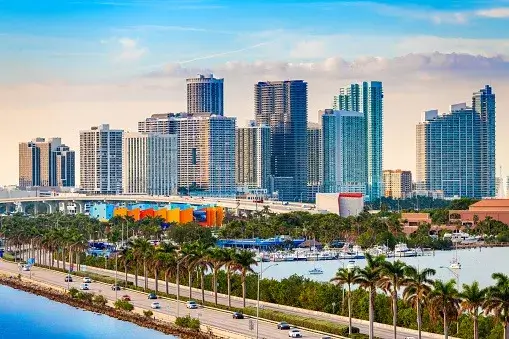
Choosing a Miami new-construction condo is partly a building decision and partly a neighborhood decision. Brickell, Edgewater, Wynwood and Downtown Miami are close on a map, but they offer different street environments, project types and ownership considerations. The best choice depends on how you intend to use the property and which trade-offs you are prepared to accept.
Fast comparison
| Area | Common buyer priority | Verify carefully |
|---|---|---|
| Brickell | High-rise urban living near offices, dining and transit | Ownership model, monthly costs, exact view and traffic access |
| Edgewater | Residential bayfront setting and water exposure | Orientation, flood and insurance information, view corridor and park access |
| Wynwood/Midtown | Arts, dining, retail and newer mixed-use projects | Rental rules, parking, furniture/management programs and street-level activity |
| Downtown Miami | Transit, Miami Worldcenter and central-city access | Precise subdistrict, nearby construction, product type and use restrictions |
Brickell
Brickell has a large selection of luxury towers, branded residences and high-rise condominiums. Its appeal includes access to the financial district, dining, shopping and transit. Yet two Brickell projects can serve very different buyers. One may focus on conventional primary or second-home ownership; another may include hotel-style services or flexible operating rules.
Best fit: buyers who prioritize a dense, established high-rise district and want many projects to compare. Key diligence: actual walking route, parking and traffic access, association budget, branded-service costs, rental provisions and view exposure.
See all curated Brickell new-construction condos.
Edgewater
Edgewater has a more residential character along Biscayne Bay and is often selected for water or skyline views. The value of a particular unit can depend heavily on its orientation and the site around it. Compare direct bay views with partial or city-facing exposures, and investigate potential future construction.
Best fit: buyers who value a residential setting and proximity to the bay and parks. Key diligence: survey and site plan, flood disclosures, insurance assumptions, reserves and association budget, balcony exposure, setbacks and causeway access.
See the current Edgewater new-construction inventory.
Wynwood and Midtown
Wynwood is known for arts, dining, entertainment and an evolving mix of offices and residences. Nearby Midtown adds established retail and residential towers. New products may use smaller furnished layouts or alternative rental and management structures, which makes document review especially important for investors and part-time owners.
Best fit: buyers who want an active mixed-use district and are comfortable evaluating newer ownership models. Key diligence: declaration and rental restrictions, management agreement, furniture requirements, unit storage, parking, noise and construction on the specific block.
Compare Wynwood and adjacent new-construction projects. The Wynwood Business Improvement District provides current district information.
Downtown Miami
“Downtown” covers multiple submarkets, including the Central Business District, Miami Worldcenter and nearby Arts & Entertainment and Overtown edges. The project mix includes conventional condos, branded residences and hospitality or flexible-use products. Transit access can be excellent, but the actual route and surrounding development matter.
Best fit: buyers who value central access, transit and newer large-scale districts. Key diligence: exact subdistrict, use and rental rules, financing compatibility, view protection, nearby construction and walking route to Metromover or Brightline.
Review Downtown Miami new-construction condos. The Miami DDA district maps help clarify the geographic labels used in marketing.
Five questions that usually decide the shortlist
- Will this be a primary home, occasional residence, conventional rental or hospitality-style investment?
- Which matters more: water exposure, walkable daily services, district energy or regional transit access?
- What total monthly and annual carrying cost is comfortable after association fees, insurance, taxes and any required services?
- Can your preferred lender finance the building’s ownership and operating model?
- Which contract, deposit and delivery risks are acceptable after legal review?
Do not choose a neighborhood from averages alone
Average prices can hide major differences in unit size, view, parking, finishing, service level and use rights. Compare a small set of actual units on a total-cost and intended-use basis. Then check the legal developer and public project records with our developer verification checklist and map the payment obligations using the deposit and closing timeline.
Start with the full Miami project inventory or read the 2026 Miami new-development guide.
Last reviewed August 2026. General real-estate information only; verify current project documents and seek qualified legal, tax, accounting and financing advice.
Get Miami New-Development Updates
Receive useful launch news, verified pricing updates, incentives, and buyer guidance. No spam; unsubscribe anytime.
